
Department of Transportation (DOT) and Federal Motor Carrier Safety Administration (FMCSA) Compliance
Overview The DOT sets national transportation safety policy; the FMCSA, a DOT agency, regulates commercial motor vehicle (CMV) operation to reduce crashes, injuries, and fatalities. Compliance with DOT and FMCSA regulations is mandatory for motor carriers, drivers, vehicle owners, and safety-sensitive employers. Noncompliance can result in civil penalties, out-of-service orders, carrier rating downgrade, loss of operating authority, and criminal exposure in severe cases.
Key Regulatory Areas
Driver qualification and licensing
Commercial Driver’s License (CDL): Drivers must hold the appropriate CDL class and endorsements for the vehicle and cargo (e.g., HAZMAT). State licensing standards must be maintained.
Medical certification: Drivers in safety-sensitive positions must hold a valid Medical Examiner’s Certificate issued by a DOT-qualified medical examiner and keep a current medical variance or waiver if applicable.
Driver Qualification File (DQF): Maintain required records (driver application, driving record, road test/certificates, inquiry to state motor vehicle records, annual review of driving record, medical certificate, and any other required items).
Hours of Service (HOS)
HOS rules limit driving and on-duty hours to reduce fatigue. Track and enforce compliance with maximum daily driving time, mandatory rest breaks, and required off-duty sleep periods.
Electronic Logging Devices (ELDs): Most drivers operating CMVs must use ELDs to record HOS. Carriers must implement ELD policies, ensure devices are certified and functioning, and retain supporting records for required retention periods.
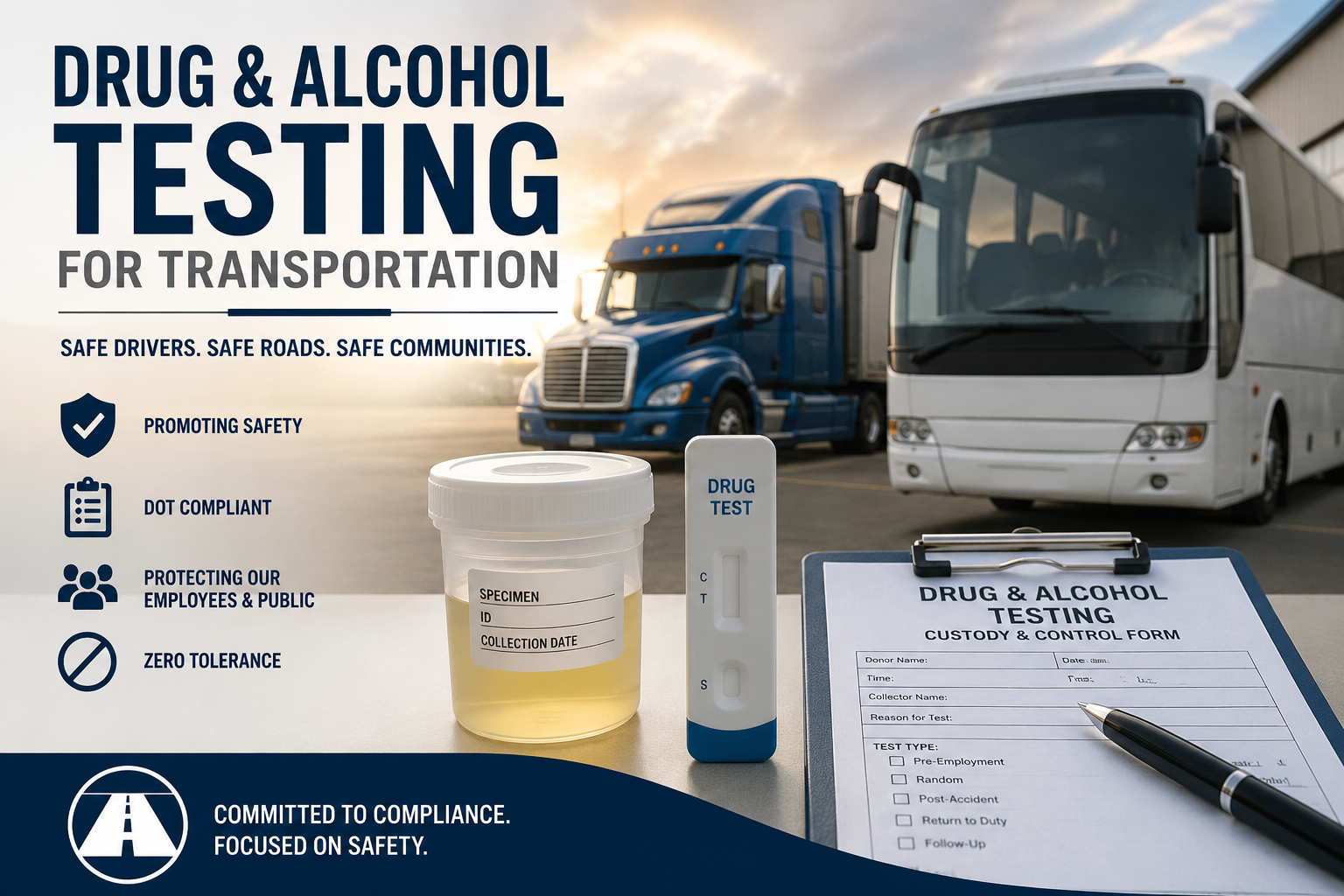
Drug and Alcohol Testing
DOT drug and alcohol testing program applies to safety-sensitive employees (drivers, drivers-in-training, certain maintenance staff).
Pre-employment, random, reasonable suspicion, post-accident, return-to-duty, and follow-up testing are required.
Prohibited substances include federally specified drugs (e.g., marijuana, cocaine, amphetamines, opioids, PCP) and alcohol above the DOT limit. Employers must use SAMHSA-certified labs and Department of Health and Human Services (HHS) procedures.
Drug and Alcohol Clearinghouse: Employers must query the Clearinghouse for prospective drivers and report violations (positive tests, refusals, and DOT program violations). Drivers with unresolved entries are prohibited from performing safety-sensitive functions until they complete return-to-duty steps.
Vehicle maintenance and inspections
Preventive maintenance program: Carriers must ensure CMVs are maintained in safe operating condition, meet inspection, repair, and maintenance standards, and document inspections and repairs (vehicle inspection reports, repair records).
Periodic inspection requirements and Driver Vehicle Inspection Reports (DVIRs) must be completed and retained per regulatory timeframes.
Controlled Substances and Alcohol Use Policies
Employers must establish written policies prohibiting drug and alcohol use in safety-sensitive positions, outline testing procedures, consequences for violations, and employee rights.
Supervisors must be trained to recognize signs of impairment for reasonable suspicion testing.
Hazmat, cargo securement, and safety of transport
Carriers transporting hazardous materials must comply with the Hazardous Materials Regulations (HMR), training, shipping papers, labeling/placarding, emergency response information, and driver qualification requirements specific to hazmat.
Cargo securement standards govern tie-downs, weight distribution, and securement devices to prevent shifting and loss.
Recordkeeping and Retention
Maintain required records per FMCSA/DOT retention schedules: driver qualification files (3+ years for some items), drug/alcohol testing records (2 years for some, 5 years for others), HOS logs and supporting documents (6 months for ELD records), vehicle maintenance and inspection records (as specified). Be prepared to produce records during compliance reviews, roadside inspections, or investigations.
Safety Management and Compliance Monitoring
Safety Management System (SMS): FMCSA uses the SMS to evaluate carriers on Behavior Analysis and Safety Improvement Categories (BASICs). Carriers should monitor SMS performance, address deficiencies, and implement corrective actions.
Internal audits: Conduct regular compliance audits covering HOS, drug/alcohol testing, driver qualification, vehicle maintenance, hazmat, and recordkeeping.
Training and policies: Maintain up-to-date written policies, employee handbooks, supervisory training (reasonable suspicion, HAZMAT handling), and driver training on regulatory obligations.
Enforcement, Inspections, and Penalties
Roadside inspections and audits: Roadside inspectors and state enforcement agencies perform inspections and drug/alcohol testing; violations can lead to out-of-service orders for drivers or vehicles.
Compliance reviews: FMCSA can perform safety audits and investigations. Serious or systemic violations can result in fines, mandated corrective action plans, suspension or revocation of operating authority, and public posting of poor
Professional Services

Describe important details like price, value, length of service, and why it’s unique. Or use these sections to showcase different key values of your products or services.

Describe important details like price, value, length of service, and why it’s unique. Or use these sections to showcase different key values of your products or services.

Describe important details like price, value, length of service, and why it’s unique. Or use these sections to showcase different key values of your products or services.
Dedicated to Regulatory Precision
Founded by policy analysts and former regulatory counsel, the practice delivers authoritative guidance grounded in rigorous legal scholarship.

Request a Consultation
Submit your questions to explore tailored compliance solutions and collaborative opportunities.